Pakistan Customs Overhauls Soft Drink Import Valuation After 9 Years: New Rules for Pepsi, Coke, and More
Published by VerseZip Business Desk
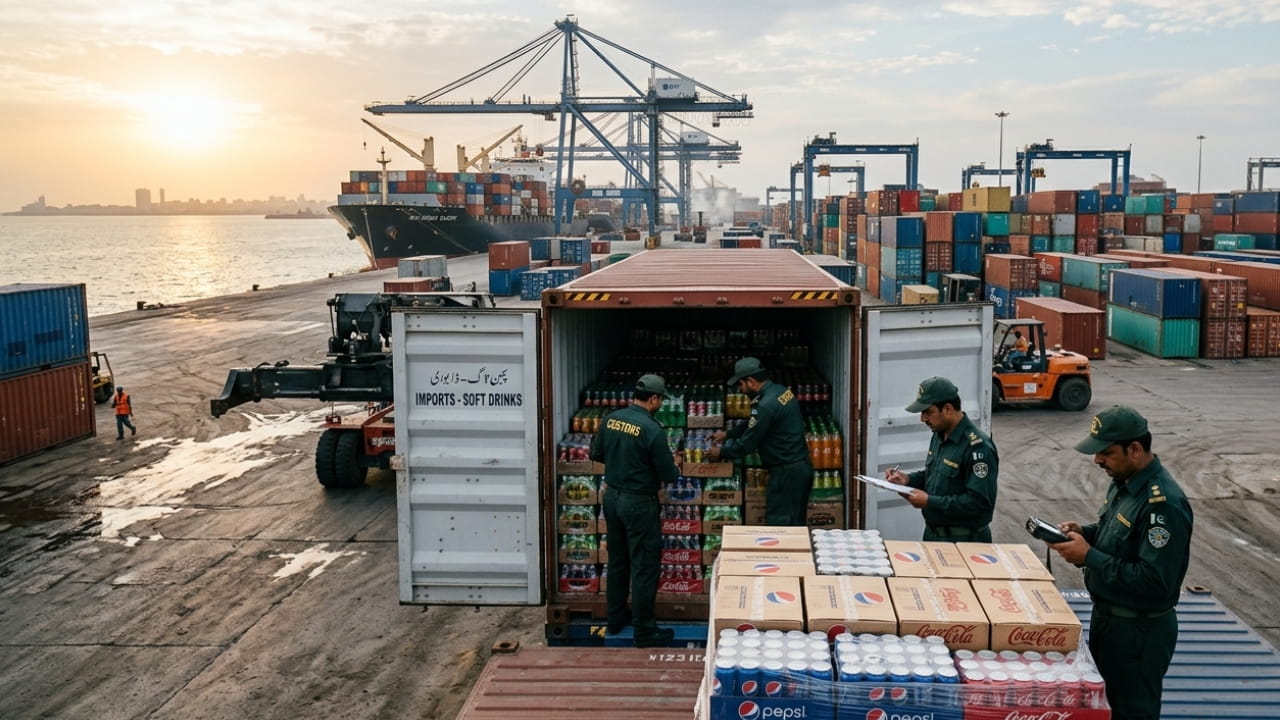
A major shift is underway at Pakistan's ports. After nearly a decade, customs authorities have completely rewritten the valuation rules for imported carbonated beverages, and it could impact everything from retail prices to government revenue.
On March 31, 2026, the Directorate General of Customs Valuation Karachi issued Valuation Ruling No. 2052 of 2026, a landmark decision that updates the customs values for a wide range of imported branded soft drinks. The previous ruling, Valuation Ruling No. 974 of 2016, had been in place for over nine years.
In the world of international trade, nine years is an eternity. Prices shift. Supply chains evolve. New brands enter the market. Old valuation methods become outdated, sometimes leading to revenue leakage or unfair taxation. Now, after extensive consultations with importers, market surveys, and a deep dive into global pricing trends, Pakistan Customs has set new benchmarks.
What Exactly Changed?
Valuation Ruling No. 2052 of 2026 establishes new customs values for imported aerated waters, soft drinks, sodas, tonics, and flavored beverages. The ruling covers three broad categories.
| Category | Brands Covered |
|---|---|
| Leading International Brands | Pepsi, Coca-Cola (Coke), Mirinda, Fanta, Sprite, 7Up, Schweppes (soft drinks, sodas, and tonics) |
| Soft and Flavored Drinks | Kinza, Glinter, Freez and similar affordable alternatives |
| Sodas and Tonics | Soda water, tonic water, and similar carbonated non-flavored or lightly flavored beverages |
Why Did Customs Change the Rules After 9 Years?
The previous ruling was issued on November 22, 2016. At that time, the soft drink import landscape looked very different. Nine years is a long time in international trade. Consider what changed:
- Inflation and currency fluctuations: The Pakistani rupee has experienced significant devaluation since 2016. Import costs in rupee terms have risen substantially.
- Global raw material prices: Aluminum, sugar, and concentrate prices have fluctuated wildly over the past decade.
- New market entrants: Brands like Kinza, Glinter, and Freez were either not present or not significant in 2016. Today, they hold measurable market share.
- Evolution of supply chains: Importers have developed new sourcing routes, suppliers, and pricing structures.
The Directorate General of Customs Valuation Karachi recognized that continuing to use 2016 values would be unfair, both to the government which risks losing revenue if values are too low, and to honest importers who might face scrutiny if declared values do not match outdated benchmarks. So they initiated a fresh evaluation under Section 25 of the Customs Act, 1969.
Valuation Methods Under Section 25 of Customs Act, 1969
How Did Customs Determine the New Values?
This was not a desk exercise. The Directorate conducted a multi-layered investigation to ensure the new values reflect real-world market conditions.
- Stakeholder Consultations: Customs officials invited importers, clearing agents, and trade representatives to share their views and supporting documents.
- Import Data Analysis: The Directorate analyzed import data from the past ninety days, giving them a snapshot of actual transaction values.
- Market Surveys: Customs officers conducted physical visits to wholesale and retail markets to determine actual selling prices.
- Online Price Monitoring: The team tracked online price trends across e-commerce platforms and international B2B portals.
- Supplier-Wise Database: The Directorate created a supplier-wise database, allowing customs to consider who the supplier is and their typical pricing patterns.
What This Means for Importers
If you are an importer of soft drinks, sodas, or flavored beverages, here is what you need to know:
- Your declared values will now be compared to new benchmarks. If your declared transaction value falls below the benchmark, you may be asked to justify the difference.
- Transparency is increasing. The supplier-wise database allows customs to distinguish between different sources, making the process fairer.
- Documentation matters more than ever. Importers should ensure that all invoices, contracts, and supporting documents are complete and consistent.
- New brands will be added faster. Stakeholders requested that new international brands be incorporated into future rulings, and the Directorate has indicated openness to periodic updates.
What This Means for Consumers
Will you pay more for your favorite soda? Possibly, but not necessarily.
Short Term: Stable Prices. For most major brands, the new customs values are likely aligned with current market realities. Importers who were already declaring accurate values may see no change in their cost structure, meaning retail prices remain stable.
Long Term: Fairer Competition. One of the goals of accurate valuation is to prevent under-invoicing, where some importers declare artificially low values to pay less duty, giving them an unfair advantage. By leveling the playing field, the new ruling could lead to healthier competition and potentially better prices for consumers over time.
Government Revenue Protection. For the government, accurate valuation ensures that duties and taxes are collected correctly, supporting public finances which ultimately benefit citizens through infrastructure, services, and economic stability.
Why This Ruling Matters Beyond Soft Drinks
- A Move Toward Data-Driven Valuation: The use of ninety-day import data, supplier-wise databases, and market surveys shows that customs is moving away from static, outdated rulings.
- Alignment with International Standards: By invoking Section 25(7) and referencing WTO valuation principles, the Directorate is aligning Pakistani practices with global norms.
- A Model for Other Sectors: If this approach proves successful, similar updates could follow for other imported goods, from electronics to textiles to auto parts.
Frequently Asked Questions
What is Valuation Ruling No. 2052 of 2026?
It is an official order issued by the Directorate General of Customs Valuation Karachi that sets new customs values for imported carbonated beverages, soft drinks, sodas, tonics, and flavored drinks. It replaces the previous ruling which had been in place for nine years.
Which brands are covered under this new ruling?
The ruling covers major international brands including Pepsi, Coca-Cola, Mirinda, Fanta, Sprite, 7Up, and Schweppes. It also covers soft and flavored drinks like Kinza, Glinter, and Freez.
Why did customs change the valuation after nine years?
Inflation, currency devaluation, global price changes, and new market entrants have made the old values outdated. Customs initiated a fresh evaluation to ensure duties and taxes are assessed accurately and fairly.
Will this increase the price of soft drinks in Pakistan?
Not necessarily. The new values are based on current market realities. Importers who were already declaring accurate values may see no change. However, importers who previously under-invoiced may face higher costs.
What is under-invoicing and why does it matter?
Under-invoicing is when an importer declares a lower value on customs documents than what was actually paid. This reduces duty and taxes paid. Accurate valuation prevents this practice, ensuring fair competition and protecting government revenue.
Does this ruling affect locally produced soft drinks?
No. This ruling applies only to imported beverages. Locally produced soft drinks are subject to different tax structures including sales tax and federal excise duty, but not customs valuation.
How can importers comply with the new ruling?
Importers should ensure that all invoices, contracts, and supporting documents are complete and consistent. They should familiarize themselves with the new valuation tables and be prepared to provide evidence if their declared values are lower than the benchmark.
Where can I find the full text of Valuation Ruling No. 2052 of 2026?
The full ruling is available on the Pakistan Customs official website and through the Directorate General of Customs Valuation Karachi. Importers and clearing agents can also request copies through official channels.
Final Thoughts: A New Era for Customs Valuation
Valuation Ruling No. 2052 of 2026 is more than a routine update. It represents a philosophical shift toward transparency, data-driven decision-making, and alignment with international best practices.
For importers, it is a signal to tighten documentation and embrace compliance. For consumers, it is likely a neutral or slightly positive development, with fairer competition without dramatic price shocks. For the government, it is a tool to protect revenue and modernize customs operations.
After nine years, the rules have finally caught up with the market. And in the fast-moving world of international trade, that is exactly where they need to be.
Sources: Valuation Ruling No. 2052 of 2026, Directorate General of Customs Valuation Karachi; Valuation Ruling No. 974 of 2016; Section 25 of the Customs Act, 1969; Federal Board of Revenue.
Share this Business Update:
Leave a Comment
Your feedback is important to us. Submitted comments are kept private and are for internal review only.